Storm Water Drainage System Description
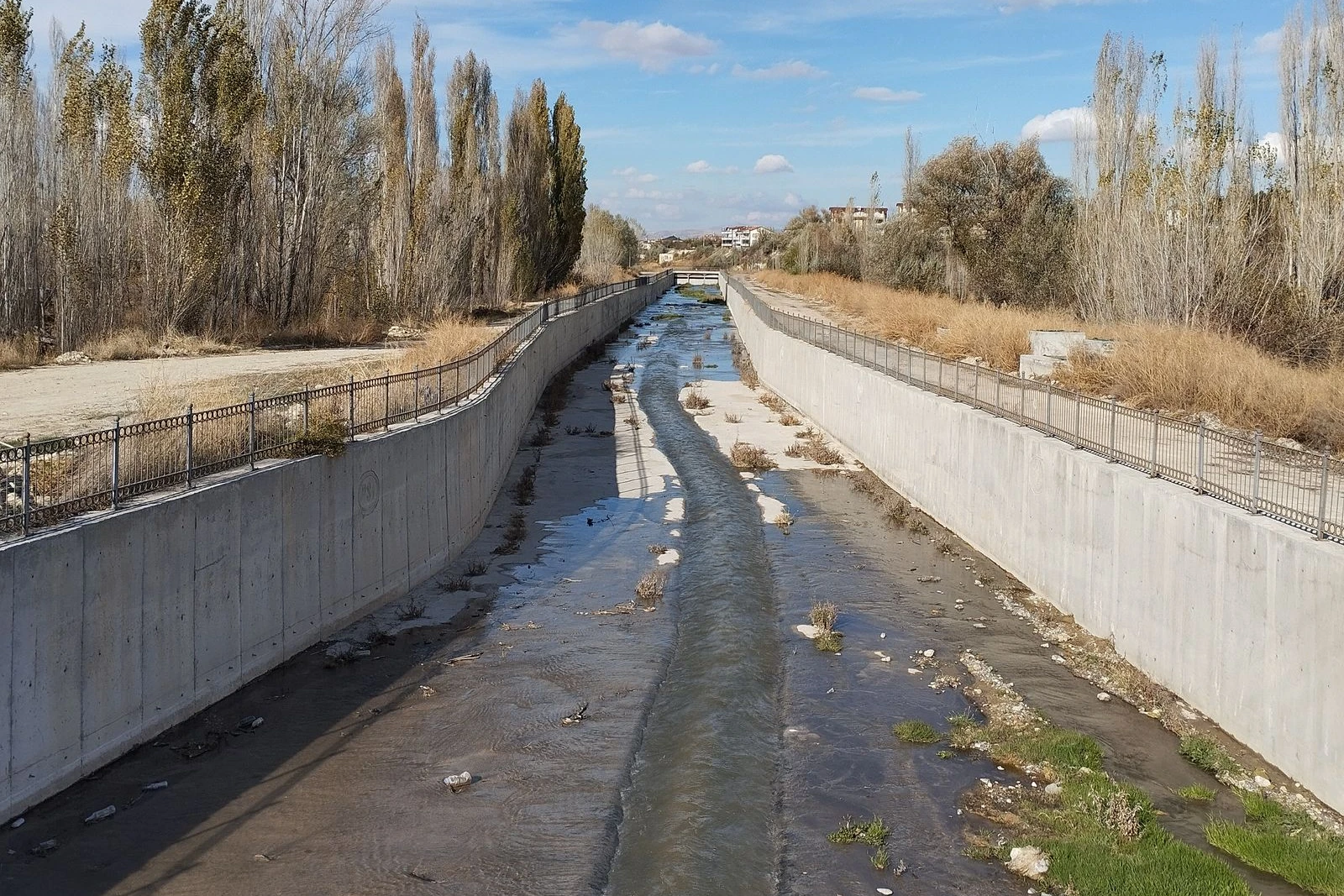
Storm water generated within the City's developed areas is collected and discharged through a combination of underground storm drains; detention and percolation basins; limited discharge into the City sanitary sewer system; and discharge into Merced Irrigation District (MID) canals and laterals via pump stations.
Livingston is traversed or bordered by several canals and laterals owned and operated by MID, including the Arena Canal and Livingston Canal. Although the canals and laterals have historically supplied water for agricultural users, they also offer a storm water drainage discharge terminal point for runoff originating from portions of the City's developed areas.
Many properties within the City are governed by Subdivision Drainage Agreements executed with MID. These agreements authorize discharge of runoff into specified MID facilities as long as several special provisions are met, and establish a per-lot one-time connection fee and an annual maintenance fee levied via the Merced County property tax bill.
Storm Water Management Program
The City of Livingston adopted a Storm Water Management Program during FY2006-2007 in compliance with federal storm water quality regulations (40 CFR Part 122 et seq., Phase II), the Porter-Cologne Water Quality Act Section 376, and the State Water Resources Control Board General Permit for Small Municipal Storm Sewer Systems (MS4s) (Water Quality Order No. 2003-0005-DWQ). The program contains a Storm Water Pollution Plan that describes control measures, work plan, budget, and performance measures in the following areas: public outreach and education; public participation and involvement; illicit discharge elimination; construction-site Best Management Practices (BMPs) over one acre; post-construction BMPs; and municipal activities.
In addition to meeting state and federal requirements, the program's objectives are to address storm water quality concerns specific to Livingston, provide a plan consistent with the community's values and means, and involve the community in developing and implementing the plan in the most cost-effective manner.
Joint-Use Opportunities
The City will avoid constructing new detention basins that serve no purpose other than to store and discharge storm runoff, as these single-function facilities are eyesores and do not integrate well with existing development. Consolidating major storm water storage into a limited number of large detention basins gives the City favorable opportunities to incorporate recreation elements into the facilities. By combining land allocated to storm water detention with land allocated to parks, the City may effectively increase its available park land through functional joint-use design.
Storm Drainage Master Plan
The Livingston Storm Drainage Master Plan describes the current condition of the City's storm drainage system, provides recommendations for mitigating nuisance flooding in problem areas, and presents a plan for new facilities to serve new developments. The plan addresses watershed hydrology and peak runoff; an infrastructure plan for new and retrofitted storm drainage facilities; joint-use opportunities and design guidelines for detention basins; funding alternatives; impact fees pertinent to new development areas; and project priority.
New development projects are required to provide site-specific or project-specific storm drainage solutions consistent with the overall infrastructure plan, though the City may allow a reasonable degree of flexibility to achieve effective solutions.
Only Rain Down the Drain
Ever wonder where rain water runs off to when it storms? Rain that washes over streets, lawns, and parking lots flows directly into the Merced River, through the Delta, and eventually into the ocean. This water is never cleaned and can pollute our surface waters with things like pet waste, litter, used oil, fertilizers, metals, soil, and other potentially toxic substances. Keeping the water our community depends on clean is everyone's responsibility, and it mostly just takes common sense.
An illicit discharge is the unlawful disposing, dumping, spilling, emitting, or other discharge of any substance other than storm water into the storm water drainage system (streets, ditches, catch basins, yard inlets, culverts, and rivers). Examples include pouring paint into or near the drainage system, changing oil or antifreeze over or near it, and washing vehicles, equipment, or dumpster pads where runoff could drain into it.
When reporting an illicit discharge to the Water Pollution Hotline at (209) 394-8044, please note the time you saw it (report immediately so responsible parties can be found and cleanup can begin quickly), where you saw it (an address, intersection, business name, or landmark), what you think it is (paint spill, oil spill, sewer leak, etc.), and whether a business was involved.
Some exceptions to the Illicit Discharge Ordinance (625, 12-1-2015) include air conditioning condensate, firefighting runoff, dechlorinated swimming pool discharges, and groundwater discharges from sump pumps, but only if they are not transporting or comingling with a pollutant source. An illicit connection is an unlawful connection from the sanitary sewer system into the storm water drainage system, or directly into lakes and streams.
Illegal dumping into storm drains is a major problem; used motor oil, discarded food, trash, and other debris are routinely dumped into storm drains that eventually discharge into the river, and debris-filled catch basins can breed pests and disease. Residents are encouraged to report illegal dumping by calling the Water Pollution Hotline at (209) 394-8044. Paint, paint thinner, chemicals, and batteries can be taken to the Merced County Regional Waste Authority (mcrwma.org).
Wash water from fundraising car washes and mobile cleaning/pressure washing carries pollutants like oils, metals, sediment, and detergents into the storm water system and local waterways. To reduce this, consider running the fundraiser through a commercial car wash; wash on gravel, grass, or other permeable surfaces; choose a location where wash water will not flow offsite or into a storm drain; pump soapy water into a sanitary sewer drain (or, if that is not feasible, onto grass or landscaping for filtration); use only hoses with automatic shut-off nozzles and biodegradable soaps; and never dump excess water on the driveway, in the gutter, or down the storm drain. Mobile cleaning and pressure washing businesses should block off storm drains and recapture wash water.
Merced County Regional Waste Authority
Drop off paint, thinner, chemicals, batteries, and more.
Tips for Pet Owners
If not disposed of properly, pet waste left on streets, pavement, yards, and driveways can be picked up by storm water runoff and carried into storm drains and nearby water sources. Pet waste can cause water quality issues like oxygen depletion and rising ammonia levels when carried to local lakes and rivers, and decaying pet waste presents health risks from disease-causing pathogens like bacteria and parasites.
To prevent this: use a bag to clean up the waste, dispose of it in the trash, and tell others to do the same. The benefits include cleaner neighborhoods, lowered potential for disease, and better water quality.
A Pollutant of Historic Proportions: Mercury
Warning signs at docks and fishing piers about not eating large amounts of fish are increasingly common, largely because of methylmercury, which forms from inorganic mercury through a natural process of anaerobic organisms in aquatic environments such as lakes, rivers, the California Delta, sloughs, retention basins, sediments, and soils. Because Central Valley municipalities like Livingston are predominantly in or downstream of Gold Country, they are likely to have methylmercury present: during the Gold Rush, miners used elemental inorganic mercury by the tons to extract gold, and much of it was lost to the environment and has since ended up in Central Valley waterways and the Delta. Other modern sources include e-waste, fluorescent light tubes and high-density discharge lamps, older thermostats and switches, and other electronic equipment. Methylmercury is bio-accumulative: it never really goes away and accumulates in each new host up the food chain.
You can be part of the solution by educating yourself on which products contain mercury (the EPA maintains a list at epa.gov/mercury/mercury-consumer-products), how mercury enters the body and affects women and children (oehha.ca.gov/fish/women-and-children), and disposal options. Many free and low-cost disposal options and even recycling incentives exist.
Mercury thermostats: some wall-mounted thermostats use mercury switches to control HVAC equipment. Mercury thermostats were widely used in California before 1992 and were legal to buy until 2006. Replace them with non-toxic programmable (digital) thermostats. Roughly 3 grams of mercury is used in a thermostat, and throwing them in the trash results in breakage that releases this powerful neurotoxin into the environment. Under the Mercury Thermostat Collection Act of 2008 (AB 2347), beginning July 1, 2009, all heating and air conditioning wholesalers with physical locations in California must collect end-of-use thermostats from the public at no charge. There are over 350 TRC collection locations in California, and some HVAC distributors let you earn redeemable points for every mercury thermostat recycled (recycle-scratch-earn.com).
Many household products contain mercury, from CFLs to button batteries to some thermometers. Use your local household hazardous waste (HHW) facility or events to dispose of and recycle them. The Merced County Regional Waste Authority Landfill is at 7040 CA-59, Merced, CA 95348, (209) 723-4481 ext. 24 (mcrwma.org). Do not dump your trash: any load contaminated by trash or garbage is rejected and the entire load is sent to the landfill at taxpayers' expense.
Community Tips & Resources
EPA: pet waste management tips for pet owners (opens in a new tab)EPA: list of consumer products that can contain mercury (opens in a new tab)OEHHA mercury in fish: women and children (opens in a new tab)Recycle, Scratch & Earn: mercury thermostat recycling incentives (opens in a new tab)Product Stewardship Institute: mercury take-back programs (opens in a new tab)Thermostat Recycling: California state laws (opens in a new tab)RecycleNow: mercury toxics (opens in a new tab)Earth911: how to recycle items containing mercury (opens in a new tab)Construction & Development Storm Water Program References
For construction storm water compliance guidance, see the State Water Resources Control Board's (SWRCB) Construction Storm Water Program, the California Stormwater Quality Association's (CASQA) Construction BMP Handbook (subscription required), and the International Stormwater Best Management Practices (BMP) Database, which features over 530 BMP studies plus performance analysis tools, monitoring guidance, and other publications. For construction education, sign up for the free monthly "Monthly Dirt" email newsletter on the California Construction General Permit. For post-construction development standards, see CASQA's New Development & Redevelopment BMP Handbook.
SWRCB Construction Storm Water Program (opens in a new tab)CASQA Construction BMP Handbook (subscription required) (opens in a new tab)International Stormwater BMP Database (opens in a new tab)Monthly Dirt: free California Construction General Permit newsletter (subscribe) (opens in a new tab)Training: BMP Roundup (June 12, 2019) (opens in a new tab)Training: Responsibilities of a QSP Inspector (opens in a new tab)CASQA New Development & Redevelopment BMP Handbook (opens in a new tab)Storm Water Documents
Volunteer Opportunities
The City of Livingston is looking for individuals and groups to volunteer with its storm water program. Current volunteer opportunities include the Citizen Storm Water Advisory Committee, the Annual Cleanup Day (September), and Surveyors. To get involved or for more information about the storm water program, contact Connie Payan at (209) 394-8044 or connie@livingstoncity.com.