Collection System Description
Livingston operates its own wastewater collection system and domestic wastewater treatment plant. The collection system consists of approximately 29 miles of 6-inch through 27-inch diameter sewer pipe, roughly half of which is 8-inch sewer mains. The "backbone" of the system consists of sewer trunk lines, generally 10 inches in diameter and larger, that convey wastewater flows to the Domestic Wastewater Treatment Plant. The largest sewer line is the 27-inch diameter Vinewood Avenue trunk line that terminates at the Domestic Wastewater Treatment Plant.
During dry weather, the average dry-weather day flow into the Domestic Wastewater Treatment Plant is 1.06 million gallons per day (mgd); wet-weather flow is currently 1.64 mgd. Continued development will increase the peak flow conveyed through the existing collection system. At build-out, the average dry-weather flow is projected to be 4.5 mgd and the average peak dry-weather flow 6.60 mgd. Segments of the existing collection system will need to be replaced to correct existing deficiencies and accommodate growth.
There are nine lift stations in the collection system, the largest being the Highway 99 Lift Station, which pumps wastewater collected from the east side of Highway 99 and discharges it on the west side into the Vinewood sewer trunk line near First Street and B Street. Four of the nine sewer lift stations are located east of Highway 99 and five south of Highway 99. Pumping capacity ranges from 3.34 mgd at the Highway 99 Lift Station to a low of 0.43 mgd at the Narada Way Lift Station.
Wastewater Collection System Master Plan
In 2007, the City Council approved a Wastewater Collection System Master Plan. This plan outlines (1) existing system conditions, (2) existing capacity deficiencies, and (3) proposed improvements to serve future growth. Future development will be served by new wastewater conveyance infrastructure, including collectors, trunks, interceptor sewer lines, and appurtenances. Expansion of the Domestic Wastewater Treatment Plant could occur entirely on the existing treatment plant property, while percolation ponds required for effluent discharge would need to be constructed outside the current treatment plant boundary.
Domestic Wastewater Treatment Plant
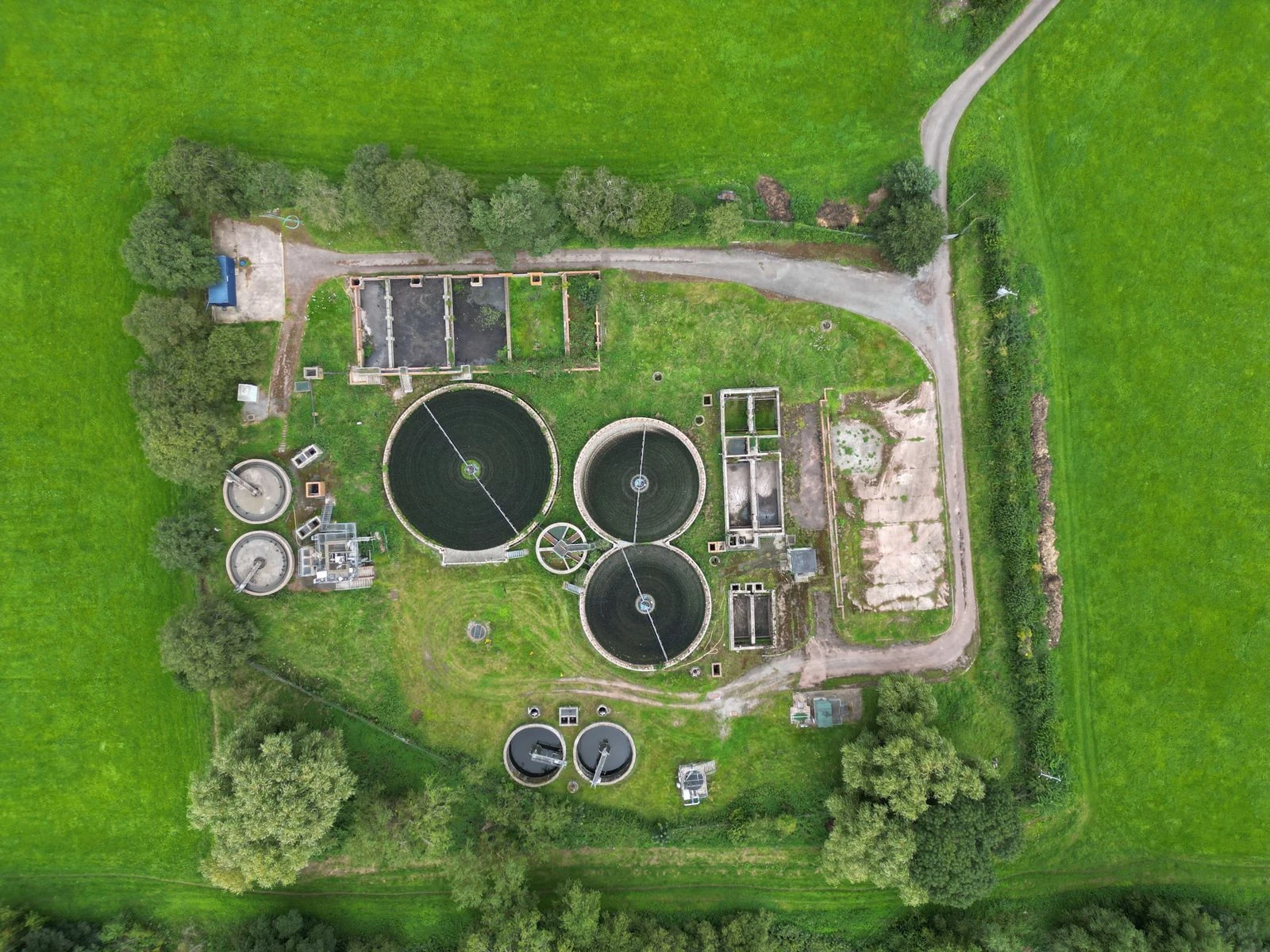
Livingston's first domestic wastewater treatment facility was constructed in 1963, consisting of screening, grit removal, primary clarification, anaerobic digestion, solar sludge drying, and six treatment/percolation ponds. In 2004, the City completed a $15.7 million upgrade that included a new oxidation ditch, two new secondary clarifiers, four new influent pumps, and a mechanical bar screen. The plant consistently produces excellent effluent well below the effluent limits, with Biochemical Oxygen Demand, Total Suspended Solids, and nitrogen levels all under 10 mg/l, approximately 20 percent of the maximum allowable limits.
The existing Domestic Wastewater Treatment Plant has sufficient capacity to treat an average daily maximum month flow (ADMMF) of 2.0 mgd. Wastewater flows could exceed the plant's capacity when the City's population approaches 21,000 people. Under Regional Water Quality Control Board (RWQCB) Order Number 89-066, Waste Discharge Requirement for the City of Livingston Wastewater Treatment Facility (April 28, 1989), the dry-weather average 30-day flow cannot exceed 1.8 mgd.
Groundwater Monitoring
The City submitted a "Revised Groundwater Work Plan" (Condor Earth Technologies, July 2006) to the Regional Water Quality Control Board as required by WDR Order No. 89-066. The work plan describes the groundwater monitoring program that helps identify and evaluate potential impacts to groundwater quality resulting from Domestic Wastewater Treatment Plant discharges, including an evaluation of groundwater elevation contour maps as part of a mounding analysis. The evaluation indicated that the present regional groundwater gradient is to the southwest near the plant. A groundwater elevation contour map based on measurements collected in February 2005 indicates a water-table mound beneath the plant, with groundwater from the mound traveling south.
The City is currently designing and completing the environmental document for expansion of the Domestic Wastewater Treatment Plant, which will increase capacity from 2.0 to 4.0 mgd. The design includes a new headworks with odor control, a second oxidation ditch, two clarifiers, a centrifuge facility with odor control to replace the sludge drying beds, a ninth percolation pond, a solids pump station, operations and maintenance buildings, and other support facilities. The City has completed 90 percent of the engineering plans and 70 percent of the environmental document. The expansion will provide the ability to serve approximately 43,000 residents, with all plant improvements constructed on the existing plant property.
Industrial Wastewater Treatment Plant
The City also owns and operates an industrial wastewater treatment plant for treating wastewater generated solely from the Foster Farms poultry processing plant. This facility is located north of Bird Street on the south bank of the Merced River and has been regulated by WDR Order No. 79-209. It consists of two aerated treatment ponds followed by ten facultative treatment and percolation ponds; the surface ponds, comprising 83 acres, sit on 121 acres of property.
The poultry wastewater is pretreated at Foster Farms through fine screening, flow equalization, and dissolved air flotation thickening. The pre-treated wastewater flows by gravity via a 42-inch diameter sewer line from the poultry facility to the Industrial Wastewater Treatment Plant. The average daily flow from 2001 through 2006 was approximately 4.0 mgd, reflecting typical operation six days per week. A portion of the plant's wastewater is reclaimed by irrigating privately owned property adjacent to the City property.
The Industrial Wastewater Treatment Plant process consists of two aerated ponds followed by ten unaerated treatment and percolation ponds and operates under Waste Discharge Order 79-209 issued by the RWQCB. Foster Farms, the owner of the 120-acre reclamation area, maintains a separate Water Reclamation Requirements Permit (WDR Order 93-091) for applying treated wastewater to the reclamation area, allowing application of up to 2.40 mgd of final effluent during the irrigation season.
Fats, Oils & Greases (FOG)
Fats, oil, and grease (FOG) are a major factor in most kitchens. In restaurants, these cooking by-products come from deep fryers, frying pans, and grills, and are transported by buckets and washed off cleaning surfaces. FOG often finds its way down the drain, which harms water quality and can lead to compliance issues for restaurants.
In the home, fats, oil, and grease may be liquids when poured into the drain, but they solidify in the sewer pipes, causing clogs and blockages. These grease-related blockages are a significant cause of sanitary sewer overflows and can also cause sewer back-ups and draining problems in your home.
Proper FOG management can avoid expensive repairs (FOG solidifies inside underground pipes and can lead to bursts, overflows, backups, and blockages, and even lawsuits for food service establishments), prevent pollution (overflows send sewer waste into lakes, streams, and oceans), and prevent business-harming inconveniences like bad odors, rodents, and pest problems.